
“Reliability isn’t a personality trait — it’s a system you build together.”
NounDesign specializes in global UI/UX talent sourcing, helping companies hire skilled offshore UI/UX designers who integrate seamlessly with their teams.
Many companies choose offshore UI/UX design to save money and speed up projects. Some get the results they want, but others face delays, unclear communication, or designers who leave before finishing the job.
The real difference usually isn’t the designer’s country. It’s how the company hires, vets, and manages the working relationship.
This guide explains how to find offshore UI/UX designers who deliver, what reliability means in real terms, and how to set up the work for a smooth start.
The Real Reason Companies Go Offshore for UI/UX
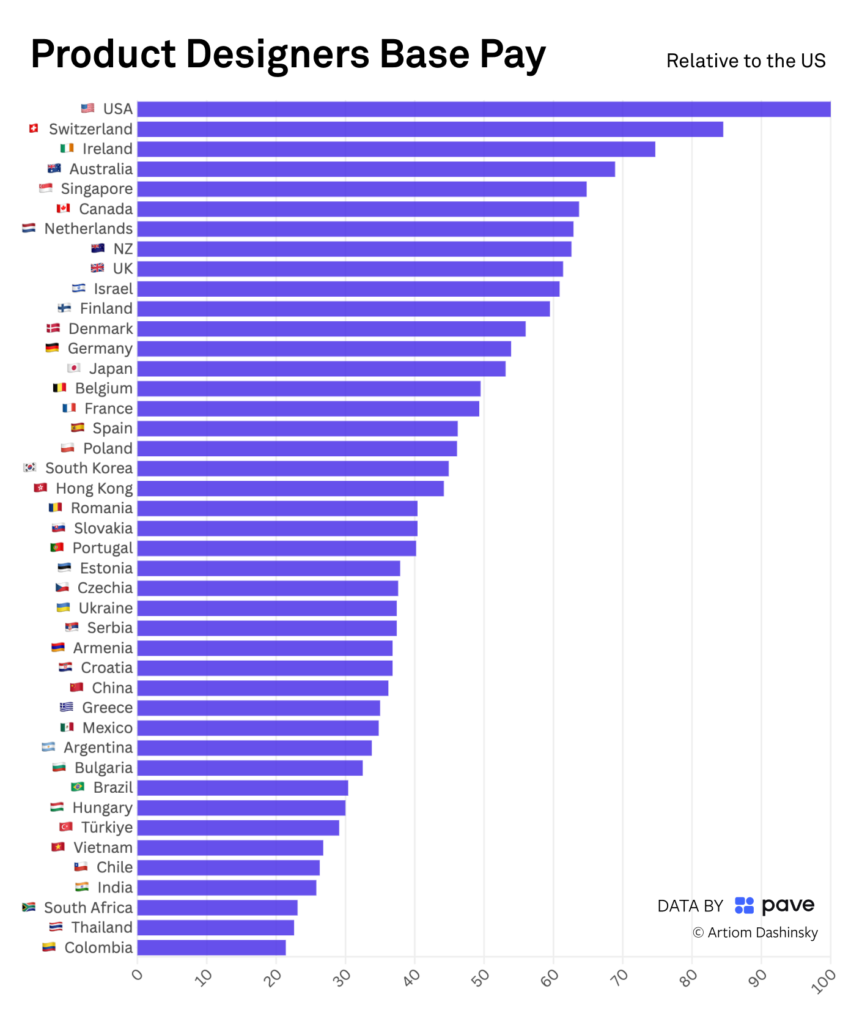
Cost is the main reason. In the US, a senior UI/UX designer earns $110,000 to $160,000 a year. Designers with the same skills in Eastern Europe, South Asia, or Latin America can cost 40% to 65% less, with no loss in quality if you hire well.
But cost is not the only driver.
Hiring locally can be tough. In big US cities, design talent is hard to find, slow to hire, and costly to keep. Offshore hiring gives access to a larger pool, including specialists in areas like design systems, motion design, accessibility, and product research that may be hard to find nearby.
Offshore hiring is also flexible. You can bring in a UIUX designer for a short project, a product launch, or a longer contract. There’s no need for employment contracts, benefits, or long notice periods.
Time zone differences can boost productivity for some teams. A US team can hand off work at the end of the day and receive finished files by morning. This works best when the working relationship is strong, making the workflow feel nearly continuous.
Ready to Grow Your Design Team?
The Risks of Hiring Offshore Outsourced UI/UX Designer That Nobody Talks About Honestly
Offshore design does have real risks. Ignoring them doesn’t help anyone.
Communication issues are more than just language. A designer may speak perfect English but still misunderstand feedback, avoid challenging bad decisions, or not mention problems until it’s too late. This isn’t a personal failing—it’s often a cultural difference that needs attention.
Not all portfolio work is original. Some designers show case studies from team projects, work directed by others, or designs made with bought UI kits. The visuals in a Dribbble portfolio don’t always reflect what you’ll get on a real project.
Limited time zone overlap can hurt collaboration. Two hours a day may seem enough, but if your designer gets stuck and can’t reach anyone for six hours, a wrong guess can waste a whole day.
Intellectual property and ownership can be tricky. If contracts aren’t clear, it can lead to legal confusion, especially when countries have different copyright rules.
Hidden costs can add up. Long revision cycles, onboarding, management time, and replacing a designer who isn’t a fit can all reduce your savings.
These risks don’t mean offshore design is a bad choice. They just mean you need to be prepared and have a good process.
What “Reliable” Actually Means?

Everyone wants a reliable designer, but it’s important to define what that really means.
Reliable design quality means the work is consistent from start to finish. Wireframes match the brief, high-fidelity screens match the wireframes, and the designer can explain every choice with real reasons—not just say “it looks better this way.” They’re skilled with tools like Figma, FigJam, Framer, or Maze.
Process reliability means the designer works in a structured way. They don’t skip straight to high-fidelity screens before understanding the problem. Their files are organized, clearly annotated, and their components are built so developers can use them easily.
Communication reliability means the designer gives updates without being prompted, handles feedback well, and asks important questions before starting instead of after delivering the wrong thing.
Deadline reliability means the designer consistently meets deadlines, uses project management tools, and warns you early if something might be delayed, not just on the due date.
Collaboration reliability means the designer works smoothly with your developers and product managers. They share assets clearly, respond to questions promptly, and see the product as a team effort—not just their own project.
Freelancer vs. Agency vs. Staffing Firm
| Cost | Lowest ($15–$65/hr offshore avg.) | Highest (markup for management and overhead) | Mid-range (fixed monthly or hourly rate) |
| Speed to Start | Fastest (days, if pre-vetted) | Slowest (proposal, scoping, onboarding) | Moderate (1–2 weeks to place a match) |
| Control | High — you direct day-to-day work | Low — agency manages internally | High — designer works under your PM |
| Quality Floor | Variable — depends entirely on who you pick | Higher floor with internal QA and reviews | Pre-screened before placement |
| Scalability | Limited to one person’s bandwidth | Easy — add team members per scope | Easy — add headcount through the firm |
| Continuity | Risky — ghost risk, availability gaps | Strong — backup resources available | Moderate — replacement provided if needed |
| Best For | Short sprints, tight budgets, or when you already know a great designer | Fixed-scope projects with a clear deliverable and no desire to manage day-to-day | Ongoing product work where you want direct control at lower cost |
Checklist: Is Your Team Ready to Work with an Offshore Designer?
Go through each item. The more boxes you check, the less friction you will have once the designer starts.
- You have a written design brief template that your team uses consistently.
- At least 2 hours of daily overlap are available for sync calls.
- You have an existing Figma workspace with brand guidelines or a design system.
- There is a clear point of contact who can give timely design feedback.
- User research or personas exist for the designer to reference
- Your team actively uses a project management tool (Notion, Linear, Jira, or similar)
- A standard NDA and work-for-hire contract is ready to sign
- You have defined handoff standards for how designs get passed to developers.
- Budget is set aside for a paid trial project (1–2 weeks) before full commitment.
- Developers on your team can give the designer direct feedback on handoffs.
Score:
- 8–10 checked: Your team is set up well. Bring someone on with confidence.
- 5–7 checked: Close the remaining gaps in week one to avoid mid-project friction.
- 4 or fewer: Do some groundwork first. Start with the brief template and contracts before hiring.
Regions Worth Knowing About
There’s strong UI/UX talent in many regions. Each area has its own strengths, but individual designers can vary widely.
Eastern Europe (Poland, Ukraine, Romania, Serbia) tends to produce designers with strong design systems thinking, clean visual style, and good enterprise product experience. Communication is generally strong.
South Asia (Bangladesh, India, Pakistan) has one of the largest design talent pools in the world. Output quality ranges enormously. Strong visual designers and app UI specialists are plentiful. The key is vetting carefully.
Southeast Asia (the Philippines, Indonesia, and Vietnam) has growing product design talent with strong mobile UX skills. Filipino designers often have a cultural familiarity with Western products that helps with communication.
Latin America (Argentina, Colombia, Brazil) has a strong tradition of UX research and product thinking. Time zone overlap with US companies is significantly better than in Asia, often just one to three hours off.
Don’t hire just based on region. Focus on the individual. These general trends are only a starting point, not a rule.
Where can I find skilled offshore UI/UX designers for hire?
Toptal prescreens applicants and accepts only a small percentage. You pay more than on other platforms, but the vetting is done. Good for companies that need to move fast and cannot afford a bad hire.
Upwork offers a large pool of designers, but quality varies widely. Use filters, look for long work histories, high job success scores, and detailed case studies. Avoid designers who can’t show their processed designs here. Screen for UX depth, not just visual appeal.
LinkedIn is a great but often overlooked place to hire offshore. Search by job title, filter by location, and contact designers with strong profiles. You can check their work history, recommendations, and sometimes their portfolios.
Offshore staffing agencies provide dedicated designers who work only with your company but are employed and managed by the agency. This reduces HR and legal work and often comes with a quality guarantee.
NounDesign connects product teams with pre-vetted offshore designers ready to work on early- and growth-stage products. The focus is on practical delivery, not just profile quality.
A Step-by-Step Vetting Process That Works

Step 1: Review Portfolios for Process, Not Just Looks
Skip the Dribbble shots and head straight to the case studies. You want to see how they approached a real problem, not how pretty their color palette is.
Ask yourself:
Does this designer show their thinking?
Do they explain why they made specific choices?
Is there any evidence of user research or testing?
If the portfolio only shows polished screens without any context, that’s a warning sign.
Step 2: Give a Paid Design Challenge
Send a short design prompt, something real but not your entire product. Give them two to four hours. Pay them for the time.
Don’t judge the work just by looks.
Check how they organize their Figma files, what questions they ask before starting, if they document their decisions, and how they deal with unclear tasks.
This step weeds out more poor fits than any interview question.
Step 3: Run a Structured Interview
Cover their design process, how they handle negative feedback, what they do when a brief is unclear, and what a project that went wrong looked like.
The last question is especially helpful. Designers who say they’ve never had a tough project either lack experience or aren’t being honest. Good designers will explain what went wrong and what they learned.
Step 4: Check References Directly
Reach out to at least two past clients. Don’t just rely on profile testimonials—talk to people who actually hired them.
Ask:
Did they hit deadlines?
How did they handle feedback?
Would you hire them again?
If not, why not?
Step 5: Start with a Trial Project
Before committing to a long-term engagement, run a two-week paid trial on something contained. One user flow, one set of screens, one component redesign.
Check real working habits: file organization, communication, responsiveness, and work quality. You’ll learn more in two weeks than in ten interviews.
How to Set Up the Working Relationship Correctly?
Finding the right designer is just the first step. How you manage the relationship will decide if it works in the long run.
Write Briefs That Actually Explain the Problem
Most offshore design failures start with a bad brief. “Make the onboarding better” is not a brief. A real brief includes:
- Business context (what the product does, who it serves, and what the goal of this project is)
- User context (who the target user is, what their pain points are)
- Constraints (technical limits, brand guidelines, existing design system)
- Success metrics (how you will know the design worked)
- Examples of what you like and what you do not want
A clear brief can cut revision cycles in half.
1. Protect Overlap Hours
Make sure your contract includes at least two to three hours of daily overlap. This is essential for early-stage or complex UX work. Real collaboration needs some live interaction. Working only asynchronously is fine once trust is built, and the designer knows your product well.
2. Define Your Design Standards Before Day One
Share your Figma file structure, naming conventions, component library, and handoff process before the designer starts. Do not assume they will figure it out. The first week of onboarding is the best time to align on the process.
If you use Figma Dev Mode, Zeplin, or custom handoff specs, walk them through it explicitly.
3. Set Clear Revision Rules
Agree upfront on the number of rounds of revisions included in each deliverable. “Unlimited revisions” sounds generous, but creates bad incentives. Two rounds of feedback with clear written notes work better for both sides.
4. Get Contracts Right
Every offshore engagement needs a signed contract that covers:
- Work-for-hire clause (you own everything they create)
- NDA covering your product, user data, and unreleased features
- Payment milestones tied to deliverables, not just time
- What happens if either side wants to end the engagement
Don’t rely on a platform’s default terms. Make sure you have a proper agreement.
5. Onboard Them Like a Real Team Member
Share your brand guidelines, user research, competitor context, and any existing design work. Introduce them to your developers and product manager in the first week. Let them ask questions and take notes.
Designers who know the full product context do better work. If you treat them like a vendor who just completes tasks, you’ll get average results.
Signs You Found the Right Person
A few things signal that a designer is genuinely strong and genuinely a fit:
They ask better questions than you expected. Not “what color should the button be” but “what action do we actually want users to take here?”
They speak up when a brief is unclear—not to be difficult, but because they know unclear briefs lead to poor designs.
Their Figma files are clean, named properly, and easy for developers to use without explanation.
They point out problems early. If they run into a blocker or spot a gap in the brief, they let you know right away instead of guessing and delivering the wrong thing.
Developers on your team do not complain about their handoffs.
They improve over time. As they learn your product, users, and standards, you’ll spend less time giving feedback by the second or third month because they already understand what you need.
The Bottom Line
Offshore UI/UX design can work well. Companies in all industries use it to launch great products without paying high local salaries.
The companies that struggle with it almost always have the same problem: they moved too quickly on hiring, gave unclear briefs, and did not establish the working relationship properly.
The companies that succeed treat offshore designers as real team members, vet them carefully, and spend time upfront on onboarding and aligning processes.
If you use a structured process to find and work with offshore UI/UX talent, you’ll get the savings and speed without the usual headaches.
At NounDesign.Agency, we connect product teams with pre-vetted offshore UI/UX designers who can start working on real products right away. If you’re building an MVP or scaling up and need reliable design help, [get in touch] to discuss your options.