


Choosing an email marketing tool involves more than just looking at the price. Consider how big your list is, what kind of automation you need, and if you sell products online. This guide reviews 20 leading email marketing platforms for 2026, including real pricing and features for each one.
Note: Pricing in this industry changes frequently. The numbers below are based on vendor data from August 2026. Always check each provider’s pricing page for the latest rates before you sign up.
Quick Comparison Table
| Software | Founded | Free Plan | Starting Price (Paid) | Best For |
| Mailchimp | 2001 | Yes (250 contacts) | $13/mo | Small businesses wanting an all-in-one tool |
| Constant Contact | 1995 | No | $12/mo | Nonprofits and event-based businesses |
| ActiveCampaign | 2003 | No | $15/mo | Teams that want CRM and automation together |
| GetResponse | 1998 | Yes (500 contacts) | $19/mo | Marketers who also run webinars |
| Brevo | 2012 | Yes (unlimited contacts) | $9/mo | Businesses that want SMS and email together |
| Kit (ConvertKit) | 2013 | Yes (10,000 subscribers) | $39/mo | Bloggers, course creators, and newsletter writers |
| AWeber | 1998 | Yes (500 subscribers) | $15/mo | Small businesses that want simple autoresponders |
| Klaviyo | 2013 | Yes (250 profiles) | $20/mo | Ecommerce brands, especially on Shopify |
| Moosend | 2012 | No | $9/mo | Budget shoppers who still want full automation |
| MailerLite | 2010 | Yes (250 subscribers) | $12/mo | Small teams that want a clean, simple builder |
| Campaign Monitor | 2004 | No | $13/mo | Agencies that manage several client brands |
| Drip | 2012 | No | $39/mo | Ecommerce stores that want deep behavior tracking |
| Omnisend | 2014 | Yes (250 contacts) | $16/mo | Ecommerce brands combining email, SMS, and push |
| SendPulse | 2015 | Yes (500 subscribers) | $8/mo | Businesses that want email, chatbots, and SMS in one place |
| Benchmark Email | 2004 | Yes (500 subscribers) | $19/mo | Teams that need multi-language campaigns |
| Sender | 2012 | Yes (2,500 subscribers) | $10/mo | Startups on a tight budget |
| EmailOctopus | 2015 | Yes (2,500 subscribers) | $10/mo | Bloggers and solo creators who send simple newsletters |
| Mailjet | 2010 | Yes (6,000 emails/mo) | $9/mo | Developers who need email and API sending together |
| Zoho Campaigns | 1996 | Yes (2,000 contacts) | $4/mo | Teams already using other Zoho apps |
| Flodesk | 2018 | Yes (limited) | $25/mo | Creators who care about design and branding |
How We Picked These Tools
We considered pricing, how easy each tool is to use, the depth of automation, and how well each platform suits different businesses. We also checked company history and stability, because sudden changes or buyouts can affect your budget. All prices listed are for the entry-level paid plan, which is what most small businesses choose.
1. Mailchimp
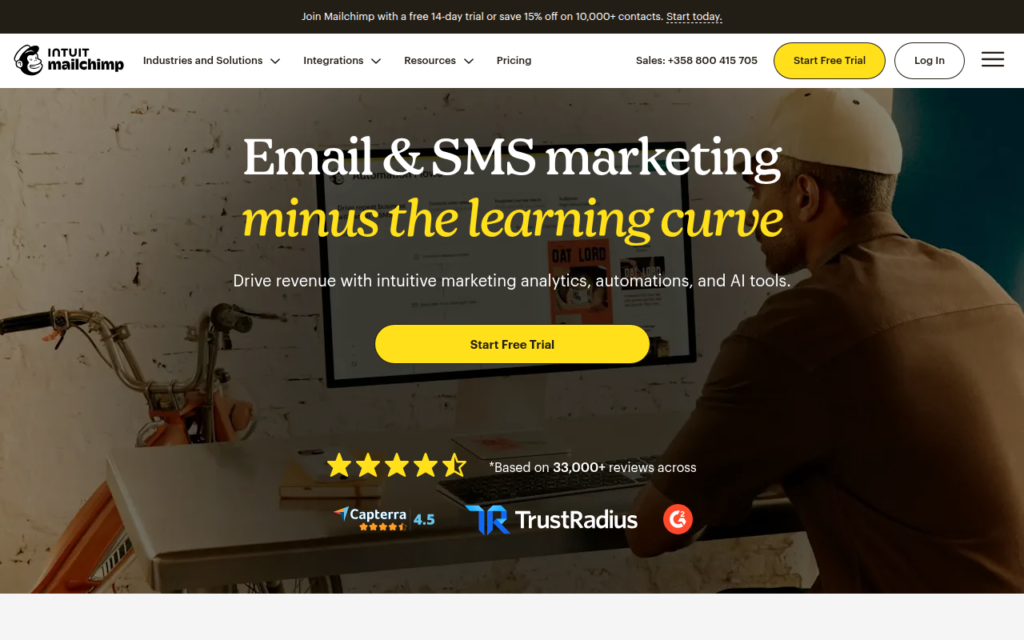
Mailchimp launched in 2001 and has grown into one of the most recognized names in email marketing. Intuit bought the company in 2021, and it now serves everyone from solo creators to mid-sized companies.
Key Features:
- Drag-and-drop email builder with hundreds of templates
- Customer journey automation for multi-step campaigns
- Built-in landing page and website builder
- Send-time optimization based on subscriber activity
- Deep integration with Shopify, WooCommerce, and other ecommerce platforms
Pricing: Free plan covers 250 contacts and 500 monthly sends. Paid plans start at $13/month for the Essentials tier at 500 contacts and rise steeply as your list grows, with Standard and Premium adding automation depth and predictive segmentation.
Best For: Small businesses that want one tool to handle email, basic websites, and light ecommerce.
Watch Out For: Pricing counts unsubscribed contacts toward your total, and the free plan lost half its contact limit in early 2026.
2. Constant Contact
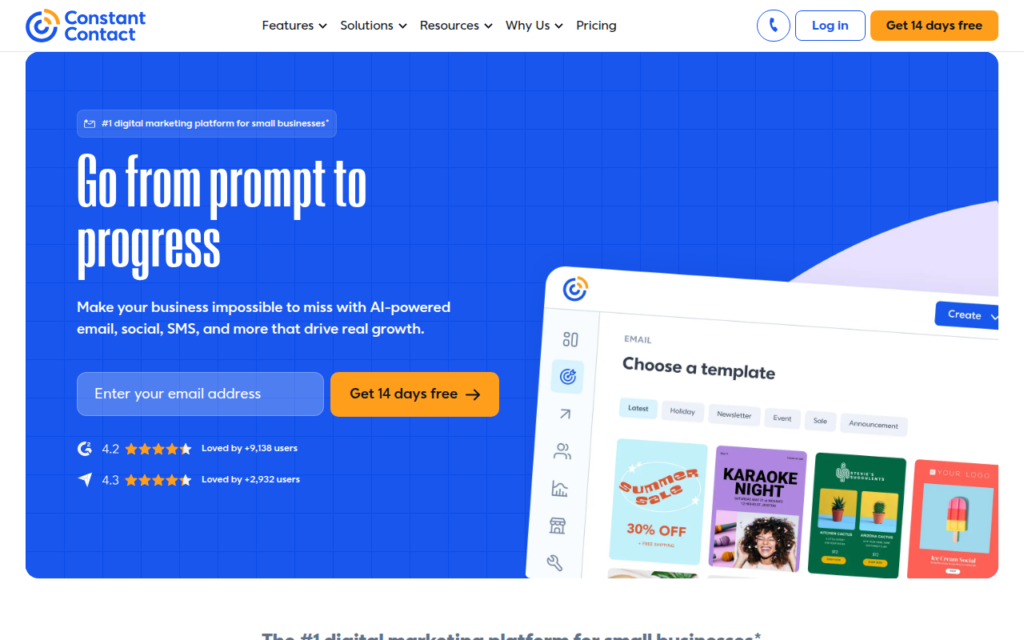
Constant Contact has been around since 1995, making it one of the oldest names on this list. It’s known for strong phone support and event management tools.
Key Features:
- Event registration and RSVP tracking built into campaigns
- Social media posting alongside email campaigns
- AI-assisted content generation for subject lines and copy
- Real-time reporting on opens, clicks, and social shares
- Phone support included on every plan tier
Pricing: No free plan, only a free trial. Lite starts at $12/month, Standard at $35/month, and Premium at $80/month, all based on 500 contacts. Costs increase fast once you add more contacts.
Best For: Nonprofits, community groups, and small businesses that host events and value phone support.
Watch Out For: The jump from 500 to 1,000 contacts can double your monthly bill on some plans.
3. ActiveCampaign
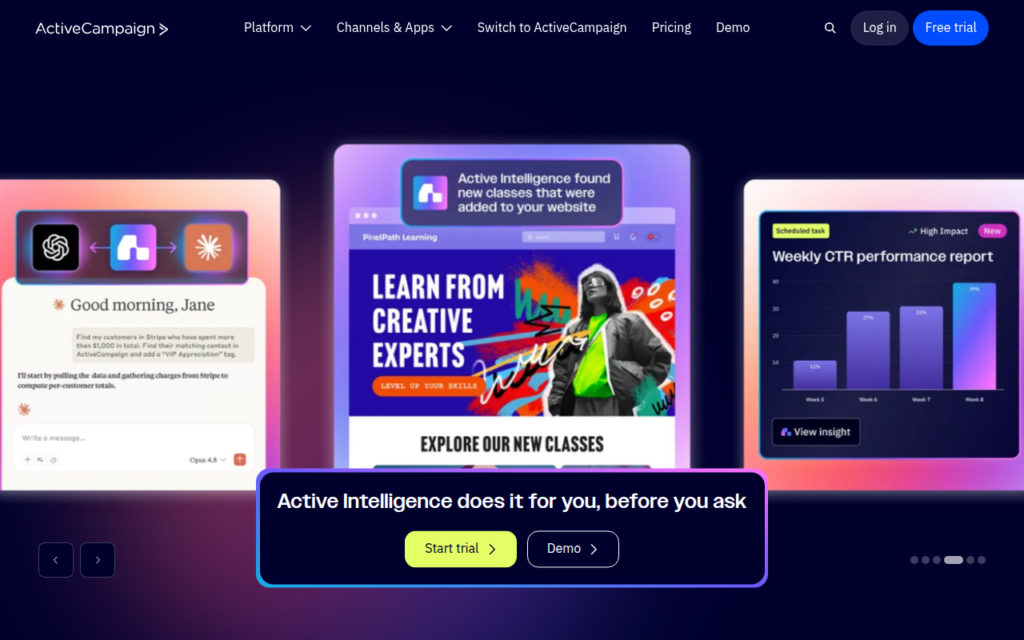
ActiveCampaign combines email marketing with a built-in CRM and sales pipeline. It’s a strong pick for businesses that want marketing and sales tools in one login.
Key Features:
- Visual automation builder with hundreds of pre-built workflows
- Built-in CRM with deal tracking and sales pipelines
- Predictive sending that times emails around subscriber behavior
- SMS marketing bundled into higher-tier plans
- Site tracking to trigger emails based on page visits
Pricing: No free plan. Starter begins at $15/month, Plus at $49/month, Professional at $79/month, and Enterprise at $145/month, all priced at 1,000 contacts on annual billing.
Best For: Growing businesses that want marketing automation and a sales CRM under one roof.
Watch Out For: The jump from Starter to Plus more than triples your monthly cost, and ActiveCampaign now counts unsubscribed and bounced contacts toward your total.
4. GetResponse
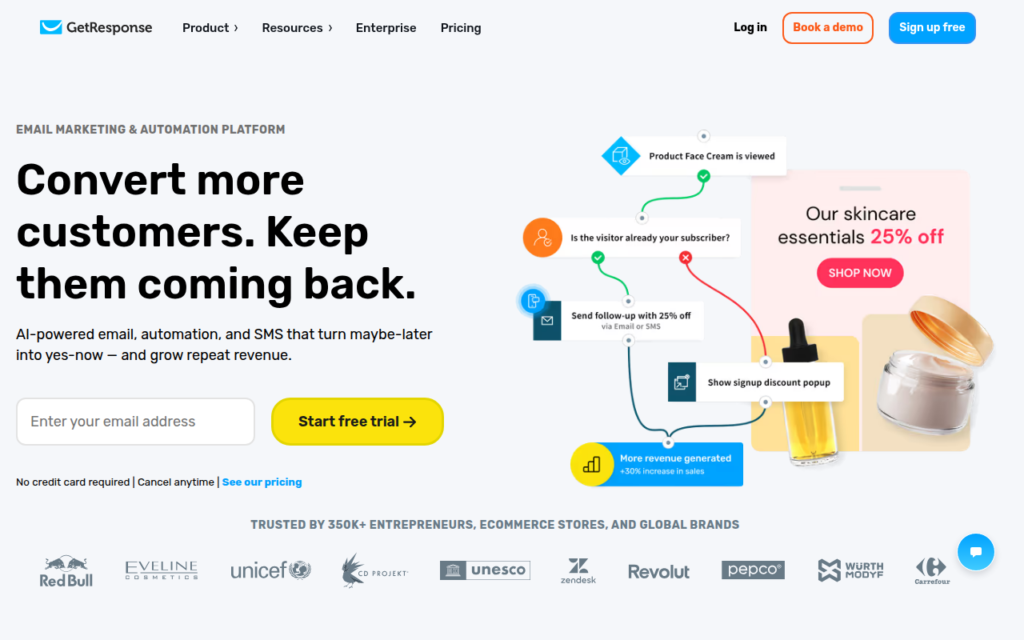
GetResponse started as a simple autoresponder tool in 1998 and has expanded into webinars, landing pages, and full marketing automation.
Key Features:
- Built-in webinar hosting for up to 300 attendees on higher plans
- Autofunnel tool for building complete sales funnels
- AI-powered product recommendations for online stores
- Unlimited email sends on every paid plan
- Paid newsletter and course monetization tools
Pricing: Free plan covers 500 contacts. Starter begins at $19/month, Marketer at $59/month, and Creator at $69/month, all for 1,000 contacts. Enterprise pricing is custom.
Best For: Marketers and coaches who want webinars and content monetization built into their email tool.
Watch Out For: The Starter plan skips multi-step automation entirely, which pushes many users to the pricier Marketer tier sooner than expected.
5. Brevo (formerly Sendinblue)
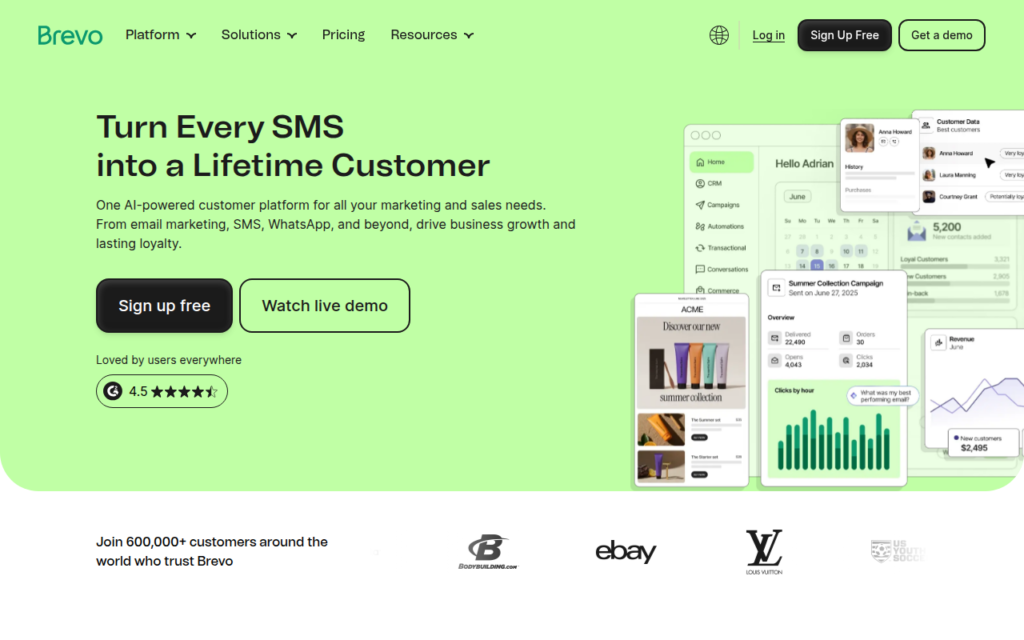
Brevo prices by the number of emails you send each month instead of your contact count. That makes it a strong option if you have a large list but don’t email often.
Key Features:
- SMS and WhatsApp marketing built into the same dashboard
- Unlimited contacts on every plan, including free
- Built-in CRM and sales pipeline tools
- Transactional email included on paid plans, no separate add-on needed
- AI-powered send time and subject line optimization
Pricing: Free plan allows 300 emails per day with unlimited contacts. Starter begins around $9/month for 5,000 emails, Standard (formerly Business) from $18/month, and Professional jumps to $499/month.
Best For: Businesses with large contact lists that send campaigns occasionally rather than daily.
Watch Out For: Removing the Brevo logo from your emails costs an extra $9 to $10 per month on the Starter plan.
6. Kit (formerly ConvertKit)
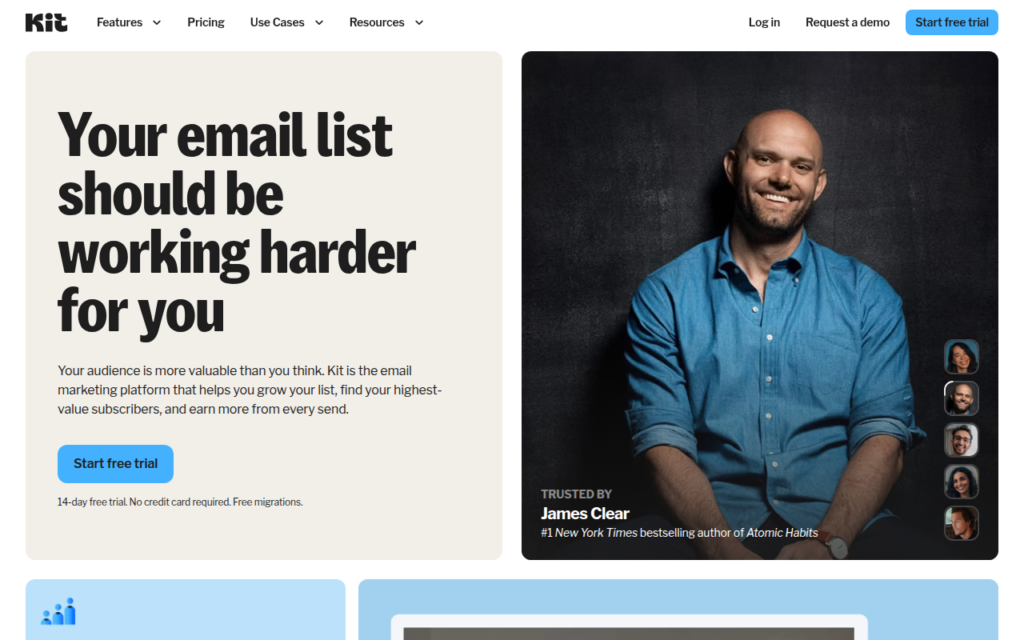
Kit rebranded from ConvertKit in 2024 and remains focused on creators: writers, podcasters, and course sellers who build a business around their email list.
Key Features:
- Visual automation builder built around subscriber tags
- Paid newsletter and digital product sales built in
- Creator Network for cross-promoting your newsletter with others
- Landing pages and forms with no subscriber limit on the free plan
- Subscriber scoring to flag your most engaged readers
Pricing: Free plan covers up to 10,000 subscribers with unlimited emails, one of the most generous free tiers in the industry. Creator starts at $39/month for 1,000 subscribers, and Creator Pro starts at $79/month.
Best For: Independent creators and newsletter writers who plan to sell digital products or courses.
Watch Out For: A September 2025 price hike more than doubled the entry cost for paid plans, so budget-conscious creators should confirm current rates before switching.
7. AWeber
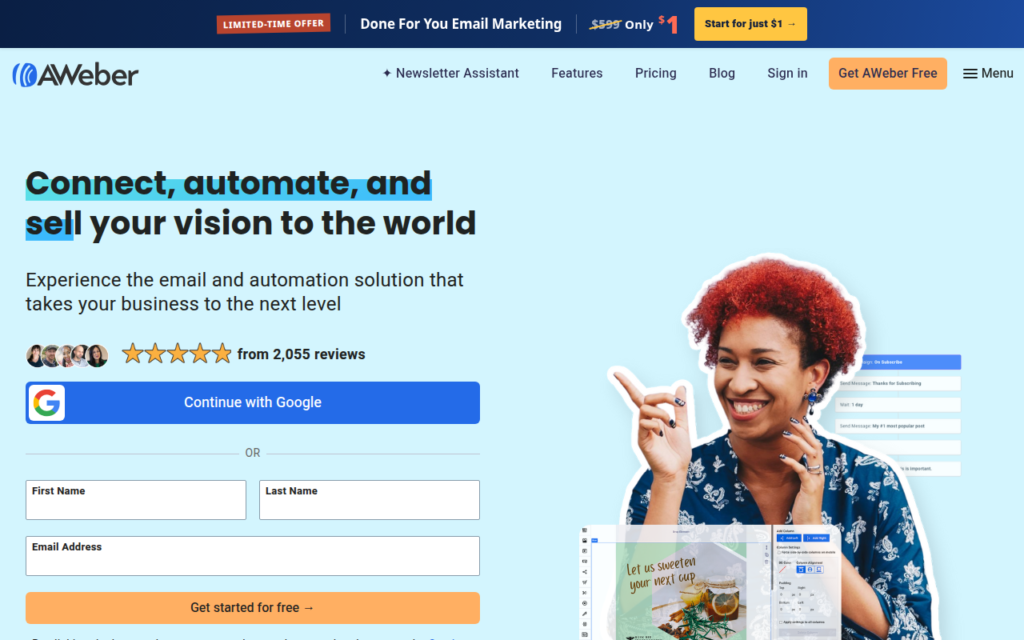
AWeber has served small businesses since 1998 and remains one of the simpler, more straightforward tools on this list.
Key Features:
- Drag-and-drop landing page builder
- AI-powered email template generator
- Built-in Canva integration for design
- Automated welcome sequences and follow-up campaigns
- E-commerce integrations with Shopify, WooCommerce, and Etsy
Pricing: Free plan covers up to 500 subscribers. Lite starts at $15/month and Plus at $30/month, both priced at 500 subscribers. A Done-For-You setup service is available for a one-time fee plus a monthly subscription.
Best For: Small business owners who want a straightforward tool without a steep learning curve.
Watch Out For: AWeber charges a 1% transaction fee on Lite and 0.6% on Plus for any products sold directly through the platform.
8. Klaviyo
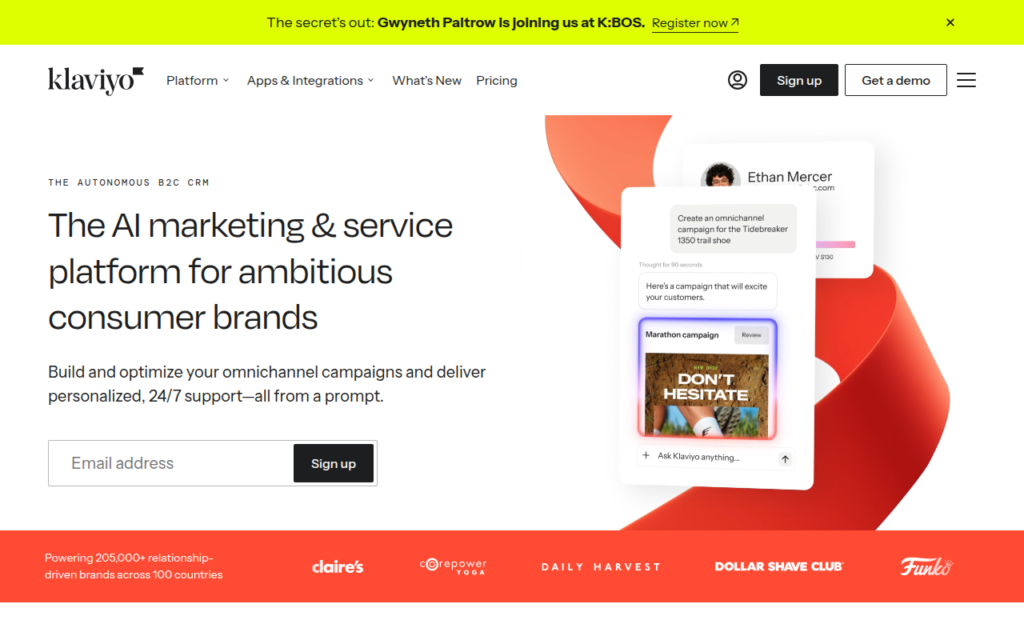
Klaviyo built its reputation serving ecommerce brands, especially those on Shopify. It ties email and SMS directly to store data like purchase history and browsing behavior.
Key Features:
- Deep Shopify, WooCommerce, and Magento integrations
- Predictive analytics for customer lifetime value and churn risk
- Pre-built flows for abandoned cart, welcome series, and win-back campaigns
- AI-generated segments and campaign content
- Combined email and SMS reporting in one dashboard
Pricing: Free plan covers 250 profiles. Paid plans start at $20/month for 500 contacts and scale up based on total active profiles, reaching several hundred dollars per month for larger lists. SMS is billed separately.
Best For: Ecommerce stores that want marketing tied closely to purchase and browsing data.
Watch Out For: Klaviyo bills by total active profiles, not just contacts you actually email, so an inactive list segment can still raise your bill.
9. Moosend
Moosend built a name as a budget-friendly alternative with surprisingly deep automation. Constant Contact acquired the company in 2025, though it still runs as a separate product.
Key Features:
- Unlimited emails and unlimited automation on the entry-level Pro plan
- Product recommendation engine for online stores
- Real-time analytics dashboard
- Drag-and-drop automation workflow builder
- Landing page builder included at every tier
Pricing: No free plan. Pro starts around $9/month and scales with your contact count, with a 30-day free trial available.
Best For: Small businesses that want full automation features without paying a premium price.
Watch Out For: Since the Constant Contact acquisition, it’s worth double-checking Moosend’s roadmap and support quality before committing long term.
10. MailerLite
MailerLite built its reputation on a clean interface and a generous free plan, though recent pricing changes have tightened that free tier.
Key Features:
- Drag-and-drop editor with a built-in AI writing assistant
- Free website and landing page builder
- Multi-step automation workflows
- Built-in survey and quiz tools
- Dynamic content blocks that change based on subscriber data
Pricing: Free plan covers 250 to 500 subscribers depending on current terms. Paid plans (renamed Comfort and Power in 2026) start around $12/month and $25/month, both scaling with subscriber count.
Best For: Small teams that want an easy-to-use platform without a big learning curve.
Watch Out For: MailerLite cut its free plan limits twice in the past year, so check the current cap before you build your list around the free tier.
11. Campaign Monitor
Campaign Monitor, now part of Marigold, is known for polished email templates and tools built for agencies managing multiple client accounts.
Key Features:
- Multi-client account management for agencies
- Premium, professionally designed email templates
- Time zone-based sending
- Detailed engagement and link-click tracking
- Custom CSS and HTML editing for advanced design control
Pricing: No free plan. Lite starts at $13/month, Essentials at $31/month, and Premier at $171/month, all priced at 500 contacts.
Best For: Agencies managing five or more client brands who want premium design without hiring a designer.
Watch Out For: Pricing scales steeply. At 25,000 contacts, Campaign Monitor often costs more than competitors with deeper automation features.
12. Drip
Drip focuses entirely on ecommerce brands. Instead of multiple feature tiers, it offers one plan with every feature included, priced only by contact count.
Key Features:
- Revenue attribution tied to specific campaigns and flows
- Visual workflow builder with ecommerce-specific triggers
- Advanced segmentation by purchase history and browsing behavior
- Product recommendation blocks in emails
- Unlimited email sends up to 32,500 subscribers
Pricing: No free plan. Starts at $39/month for 2,500 contacts, $89/month for 5,000 contacts, and $154/month for 10,000 contacts, with all features included at every tier.
Best For: Online stores that want every automation feature available without upgrading tiers as they grow.
Watch Out For: There’s no free plan and no lower-cost entry point, so it’s a bigger commitment for a brand-new store.
13. Omnisend
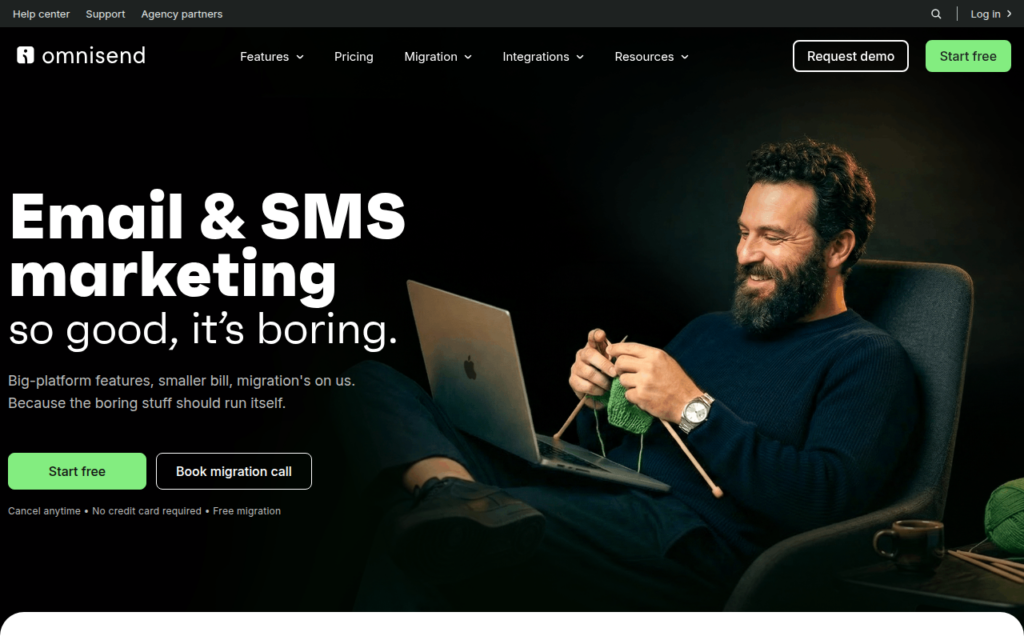
Omnisend combines email, SMS, and push notifications specifically for ecommerce stores, with a strong focus on Shopify integration.
Key Features:
- Pre-built automation for cart abandonment and order confirmations
- Combined email, SMS, and web push in one workflow builder
- Product picker tool to add store items directly into emails
- Audience segmentation based on shopping behavior
- A/B testing across subject lines, content, and send times
Pricing: Free plan covers 250 contacts and 500 emails per month. Standard starts at $16/month for 500 contacts, and Pro starts at $59/month with a 2,500-contact minimum, which includes SMS credits.
Best For: Ecommerce brands that want email and SMS working together without paying for two separate tools.
Watch Out For: SMS pricing and rules changed for accounts created after May 2026, so confirm current SMS costs before budgeting.
14. SendPulse
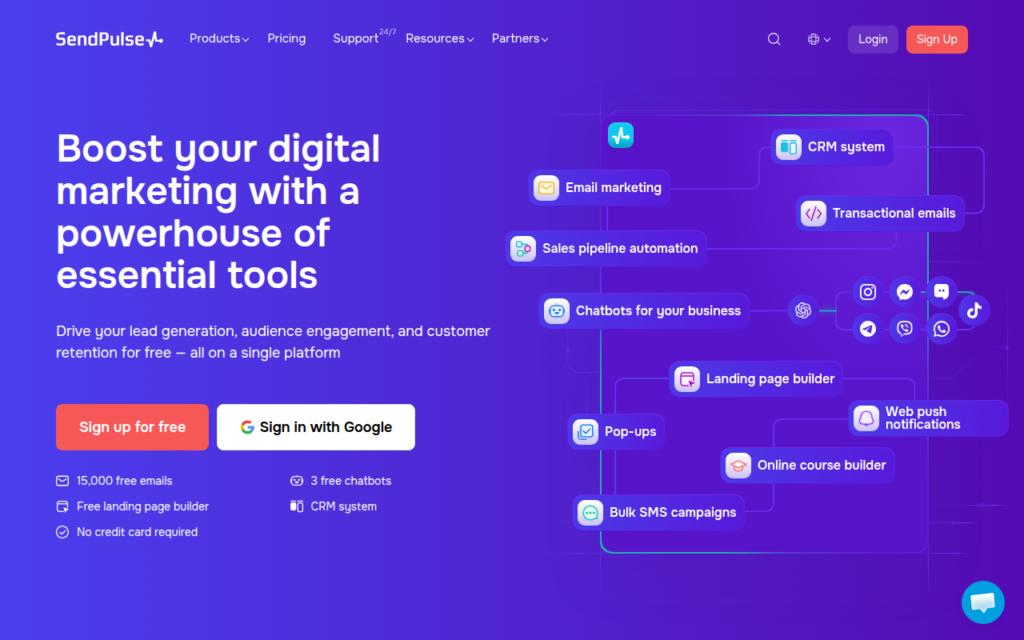
SendPulse positions itself as a multichannel platform, combining email with SMS, web push, and chatbot messaging for Facebook and WhatsApp.
Key Features:
- Chatbot builder for Facebook Messenger, Instagram, and WhatsApp
- Web push notifications alongside email
- Automation builder with conditional branching
- Free plan includes access to most core features
- Pay-as-you-go pricing option instead of a monthly subscription
Pricing: Free plan covers 500 subscribers and 15,000 emails per month. Standard starts around $8/month for 500 subscribers.
Best For: Businesses that want to combine email with chatbot and web push marketing in one place.
Watch Out For: Some features are split across separate SendPulse products, so check exactly what’s included before assuming a feature is bundled in.
15. Benchmark Email
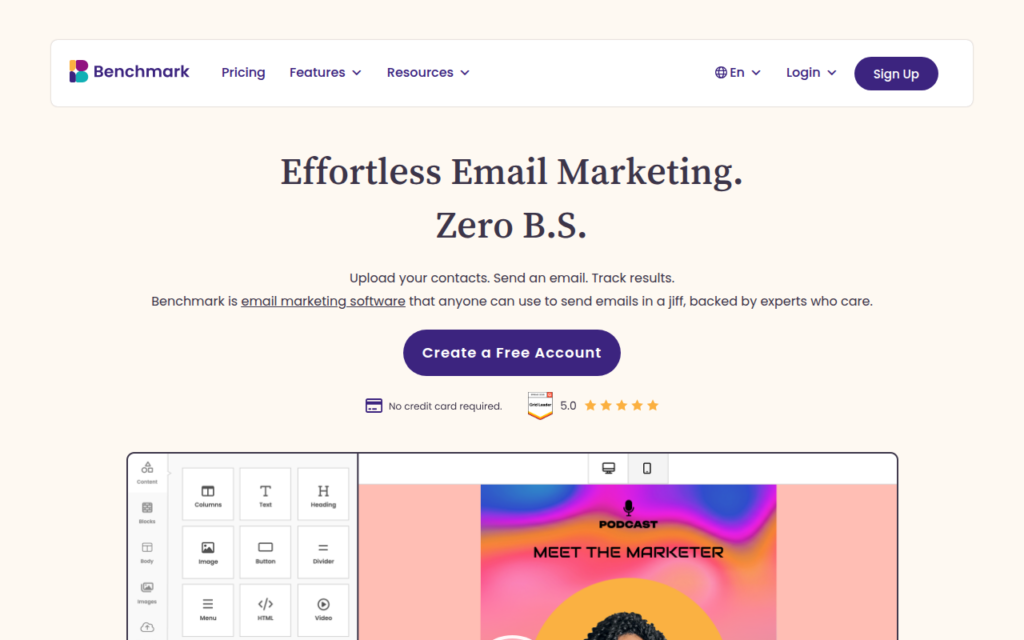
Benchmark Email has served international businesses since 2004, with support for campaigns in multiple languages.
Key Features:
- AI-assisted email design tools
- Multi-language interface and support
- Real human customer support on paid plans
- Simple drag-and-drop email builder
- Contact management tools with tagging and segmentation
Pricing: Free plan covers 500 subscribers with limited sends. Pro plans start around $19 to $37/month, depending on current promotions, based on 500 contacts.
Best For: Businesses running campaigns across multiple languages or regions.
Watch Out For: Automation and advanced segmentation are limited compared to competitors at a similar price point.
16. Sender
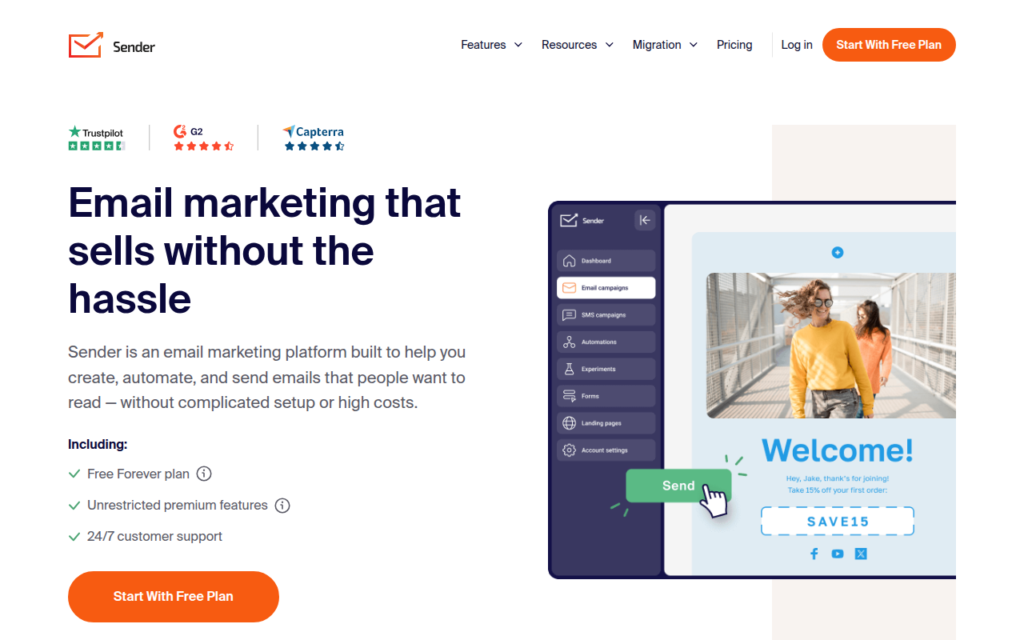
Sender built its business on undercutting competitors with a genuinely generous free plan and low-cost paid tiers.
Key Features:
- SMS marketing included alongside email on paid plans
- Automation builder with pre-built templates
- Popup and embedded signup forms
- Real-time analytics dashboard
- Transactional email support
Pricing: Free plan covers 2,500 subscribers and 15,000 emails per month. Standard starts at $10/month for 1,000 subscribers, and Professional roughly doubles both the price and send allowance.
Best For: Startups and small businesses that want a real free plan with automation included, not just a stripped-down trial.
Watch Out For: The annual billing discount mainly applies to first-time users, so read the fine print before assuming you’ll get the advertised rate every year.
17. EmailOctopus
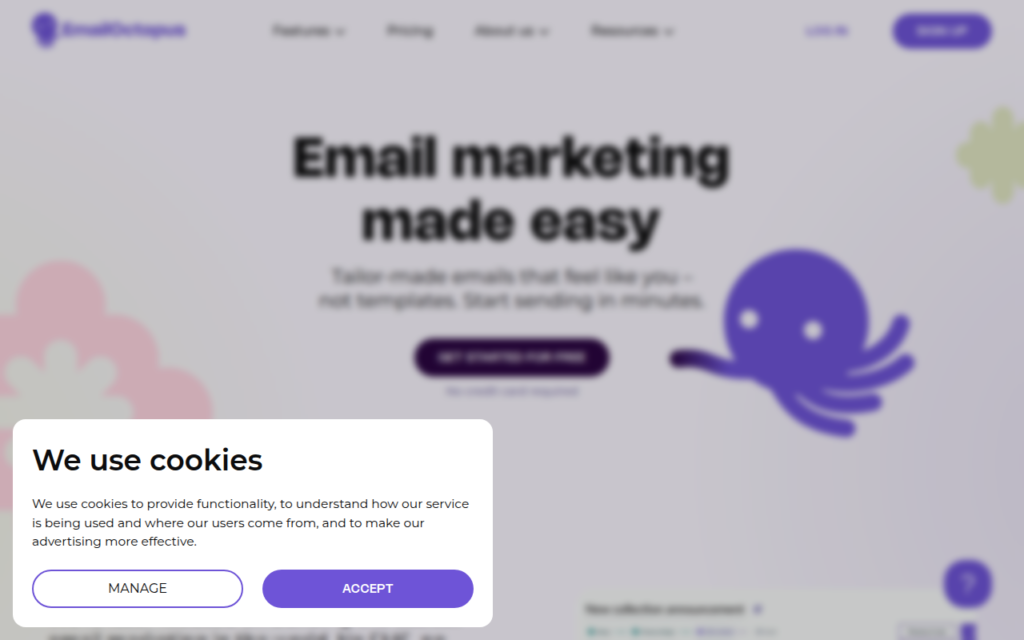
EmailOctopus keeps things simple: no CRM, no chatbots, just email done at a low price point.
Key Features:
- Clean, simple drag-and-drop email builder
- Basic automation for welcome series and drip campaigns
- Landing pages and signup forms
- Option to connect Amazon SES for high-volume, low-cost sending
- Straightforward reporting on opens, clicks, and bounces
Pricing: Free plan covers 2,500 subscribers and 10,000 emails per month. Pro starts at $10/month for 500 subscribers and scales up from there.
Best For: Bloggers, solo creators, and small nonprofits that want a no-frills, budget-friendly tool.
Watch Out For: The feature set is limited compared to all-in-one platforms. There’s no built-in CRM, SMS, or advanced ecommerce integration.
18. Mailjet
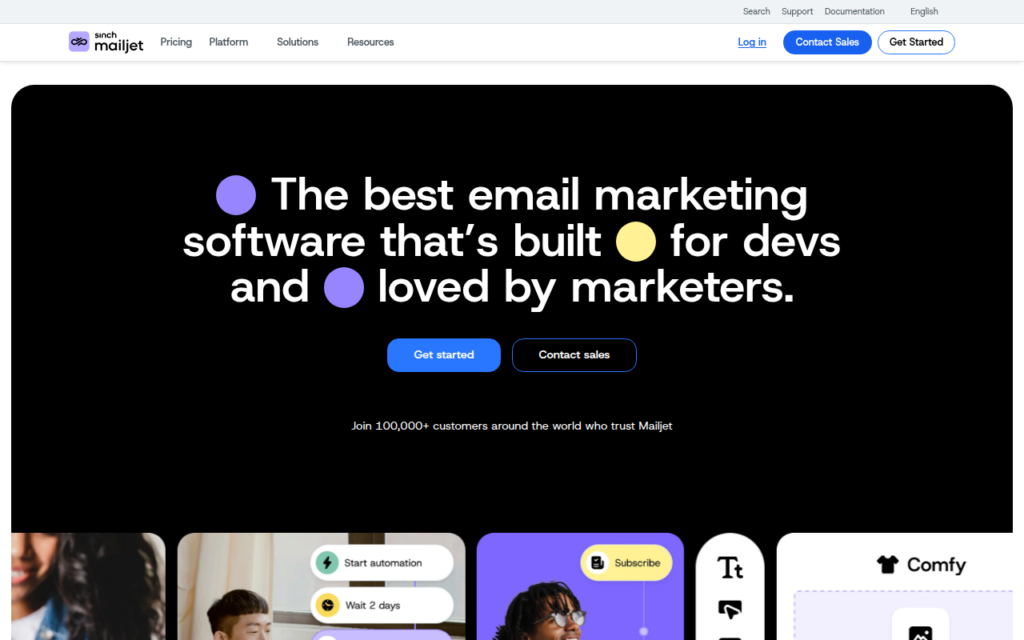
Mailjet, part of the Sinch network, blends marketing email with developer-focused transactional email and API sending.
Key Features:
- SMTP relay and API access on every plan, including free
- Real-time collaborative email editor for teams
- MJML support for developers building custom templates
- Combined marketing and transactional email in one account
- Subaccounts for agencies managing multiple clients
Pricing: Free plan covers 6,000 emails per month with a 200-per-day limit. Starter begins at $9/month for 8,000 emails, Essential at $17/month, and Premium at $27/month.
Best For: Developers and technical teams that need marketing email and transactional email (like password resets) in one platform.
Watch Out For: Mailjet is pricing on emails sent, not contacts, so a small list with frequent sends can cost more than expected.
19. Zoho Campaigns
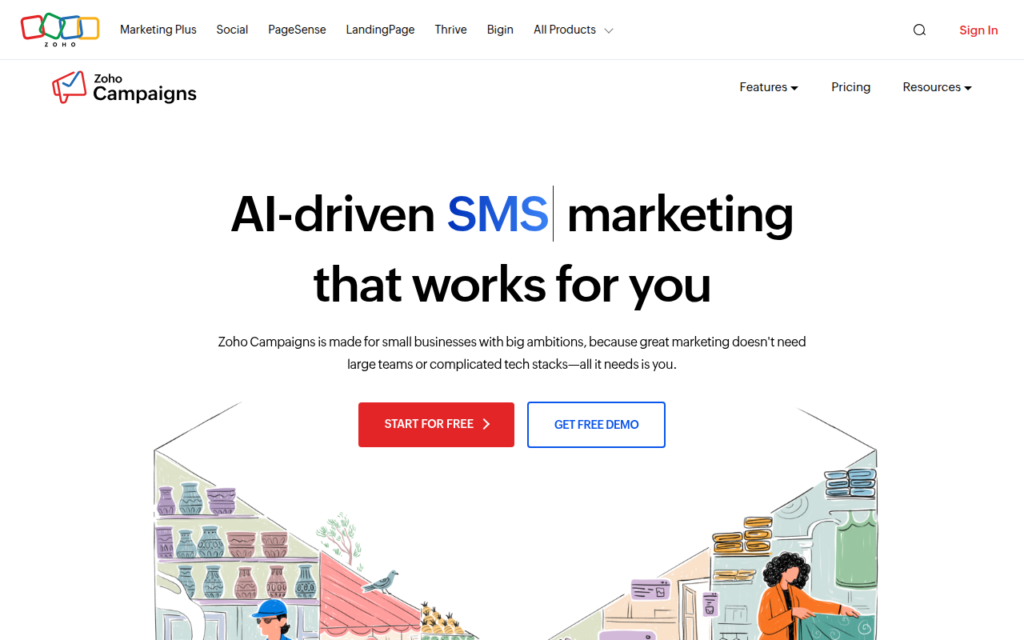
Zoho Campaigns is the email marketing piece of the larger Zoho software suite, which includes CRM, forms, and dozens of other business tools.
Key Features:
- Deep integration with Zoho CRM and Zoho Forms
- Pay-as-you-go credit option instead of a monthly plan
- Ecommerce follow-up automation on the Professional tier
- Recipient time zone-based sending
- Built-in A/B testing for subject lines and content
Pricing: Free plan covers 2,000 contacts and 6,000 emails per month. Standard starts around $4/month for 500 contacts, and Professional starts slightly higher with more automation features.
Best For: Businesses already using Zoho CRM or other Zoho apps who want everything under one login.
Watch Out For: The interface feels less polished than dedicated email tools, and some advanced features require the pricier Professional tier.
20. Flodesk
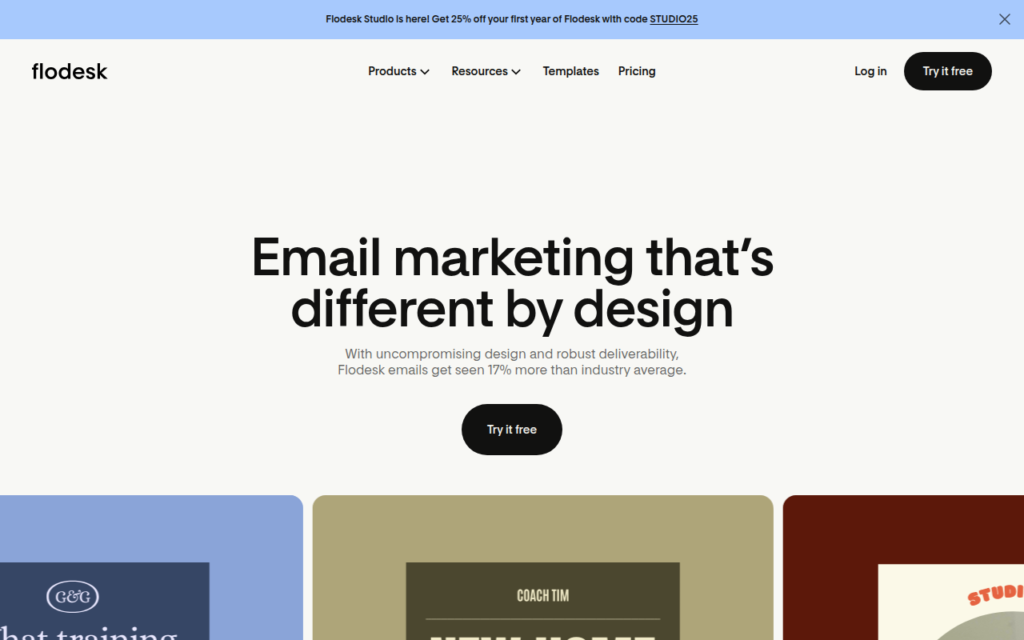
Flodesk built its early reputation on flat-rate, unlimited-subscriber pricing. That model ended in December 2025, and pricing now scales with your list size.
Key Features:
- Design-forward templates built for visual brands
- Flodesk Checkout for selling digital products and subscriptions
- Simple automation workflow builder
- Link-in-bio page builder
- Custom fonts and brand color tools
Pricing: Free plan available with limited features. Lite starts at $25/month for 1,000 subscribers, Pro at $28/month, and Everything at $54/month.
Best For: Creators and small businesses that care about polished design and are willing to pay more for it.
Watch Out For: The old flat-rate unlimited plan is gone for new users, so growing lists now cost noticeably more than they used to.
Feature Comparison
| Platform | Automation | SMS Marketing | E-commerce Features | Free Plan |
| Mailchimp | Advanced | Add-on | Strong | Yes |
| Constant Contact | Moderate | Add-on | Light | No |
| ActiveCampaign | Advanced | Add-on | Moderate | No |
| GetResponse | Advanced | Add-on | Moderate | Yes |
| Brevo | Moderate | Included | Light | Yes |
| Kit | Moderate | No | Light | Yes |
| AWeber | Basic | No | Light | Yes |
| Klaviyo | Advanced | Add-on | Strong | Yes |
| Moosend | Advanced | No | Moderate | No |
| MailerLite | Moderate | No | Light | Yes |
| Campaign Monitor | Basic | No | Light | No |
| Drip | Advanced | No | Strong | No |
| Omnisend | Advanced | Included | Strong | Yes |
| SendPulse | Moderate | Add-on | Light | Yes |
| Benchmark Email | Basic | No | Light | Yes |
| Sender | Moderate | Included | Light | Yes |
| EmailOctopus | Basic | No | Light | Yes |
| Mailjet | Basic | No | Light | Yes |
| Zoho Campaigns | Moderate | Add-on | Moderate | Yes |
| Flodesk | Basic | No | Moderate | Yes |
How to Choose the Right Tool
Begin by considering your contact list size and budget, because costs can rise quickly once your list grows past a few thousand.
Next, think about your actual needs. For online stores, Klaviyo, Omnisend, or Drip offer helpful ecommerce automation.
If you’re a solo creator building an audience, Kit or Flodesk are better suited than a complex CRM tool. If your team already uses Zoho or needs a built-in CRM, Zoho Campaigns or ActiveCampaign are better choices than a standalone email tool.
Try out the free plan or trial before making a decision. Most platforms let you create a few campaigns and test the automation builder without paying upfront.
Frequently Asked Questions
What is the cheapest email marketing software in 2026?
Zoho Campaigns and Mailjet both offer free plans, and Zoho’s paid tier starts around $4/month. For a genuinely useful free plan with no time limit, Brevo and Sender both stand out since they include automation at no cost.
Which email marketing software is best for ecommerce?
Klaviyo, Omnisend, and Drip are built specifically for online stores. All three connect directly to your store data, so you can trigger emails based on what someone bought or left in their cart.
Can I switch email marketing platforms without losing my subscriber list?
Yes. Every platform on this list lets you export your contacts as a CSV file and import them into a new tool. You will need to re-create your automation workflows and templates manually, since those don’t transfer between platforms.
Do I need a paid plan to start email marketing?
No. Fourteen of the 20 tools on this list offer a free plan that includes real automation features, not just a stripped-down trial. Brevo, Sender, and Omnisend all offer generous free tiers that work for a small but active list.
What is the difference between Mailchimp and Klaviyo?
Mailchimp is a general-purpose email tool that works for almost any type of business. Klaviyo is built specifically for ecommerce, with deeper integration into store platforms like Shopify. If you don’t run an online store, Mailchimp is usually the simpler and cheaper choice.
How much does email marketing software typically cost?
Entry-level paid plans range from $4 to $39 per month for a small list of around 500 to 1,000 contacts. Costs rise from there based on your list size and the features you need, with most small businesses paying between $20 and $100 per month once they’re actively growing their list.